

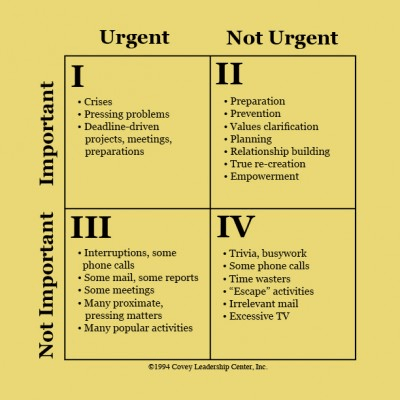
Stephen Covey’s time management matrix
- Quadrant I: Urgent and Important
Encompasses tasks that require immediate attention, such as crises, emergencies, and pressing deadlines
- Quadrant II: Not Urgent but Important
Includes activities that contribute to long-term goals and personal development, such as planning, relationship building, and preventative measures
- Quadrant III: Urgent but Not Important
Involves tasks that demand immediate attention but don’t contribute to significant goals, like interruptions, some meetings, and some emails. Some productivity resources suggest focusing on minimizing or delegating these to free up time for more important tasks
- Quadrant IV: Not Urgent and Not Important
Contains time-wasting activities and distractions, like excessive social media or aimless browsing. Resource sites suggest it’s beneficial to minimize or eliminate these activities
By understanding and prioritizing tasks within these four quadrants…
…we can improve our time management, focus on what truly matters, and achieve greater productivity and well-being
Why Focus on Quadrant II?
- Long-Term Success: By focusing on important, non-urgent tasks, you build a solid foundation for future achievements
- Reduced Stress: Proactive planning and prevention can help you avoid the stress and chaos of constant fire-fighting
- Improved Quality of Life: Quad II activities contribute to a more balanced and fulfilling life by addressing your needs and goals
- Increased Effectiveness: By spending more time in Quad II, you can become more productive and efficient in all areas of your life
Key Characteristics of Quadrant II Activities
- Important: They contribute significantly to your goals and values
- Not Urgent: They don’t demand immediate attention but have long-term consequences if neglected
- Focus on Prevention: They help you avoid crises and maintain a proactive approach to life
Examples of Quadrant II Activities
Strategic Planning: Setting goals, developing action plans, and thinking ahead to anticipate future needs
Relationship Building: Nurturing personal and professional relationships through quality time and communication
Personal Development: Learning new skills, improving your knowledge, and working on self-improvement
Health and Wellness: Exercising, eating healthy, and managing stress to maintain well-being
Creative Renewal: Taking time for hobbies, reflection, and activities that inspire you
Proactive Prevention: Addressing potential problems before they escalate into crises
How to Spend More Time in Quadrant II
1. Identify Roles and Goals: Define your key roles (spouse, professional, friend etc) and set goals for each
2. Schedule Quadrant II Activities: Treat important, non-urgent tasks as high-priority appointments and schedule them into your week.
3. Learn to Say No: Be willing to say no to less important tasks, especially those in Quadrants III and IV, to create more time for Quadrant II.
4. Utilize Tools: Use a planner or calendar to schedule and track your Quadrant II activities.
5. Prioritize What Matters Most: Focus on activities that align with your values and contribute to your long-term goals
Share your thoughts below!

 Core by Corie